


WarriorCollective
Muay Thai Training - Building Elite Muay Khao Fighters with Bryan Popejoy
Muay Thai Training - Building Elite Muay Khao Fighters with Bryan Popejoy
Couldn't load pickup availability
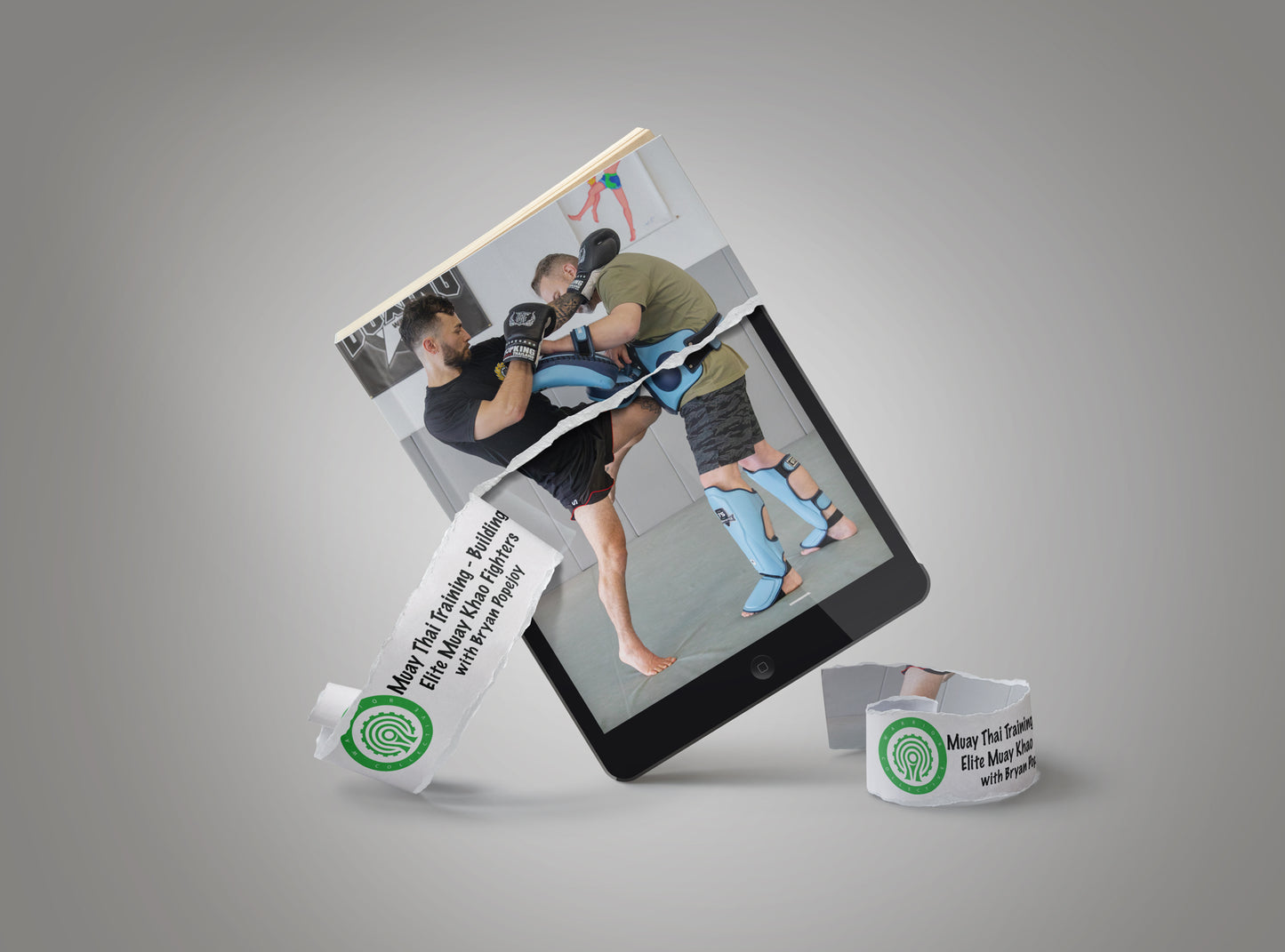

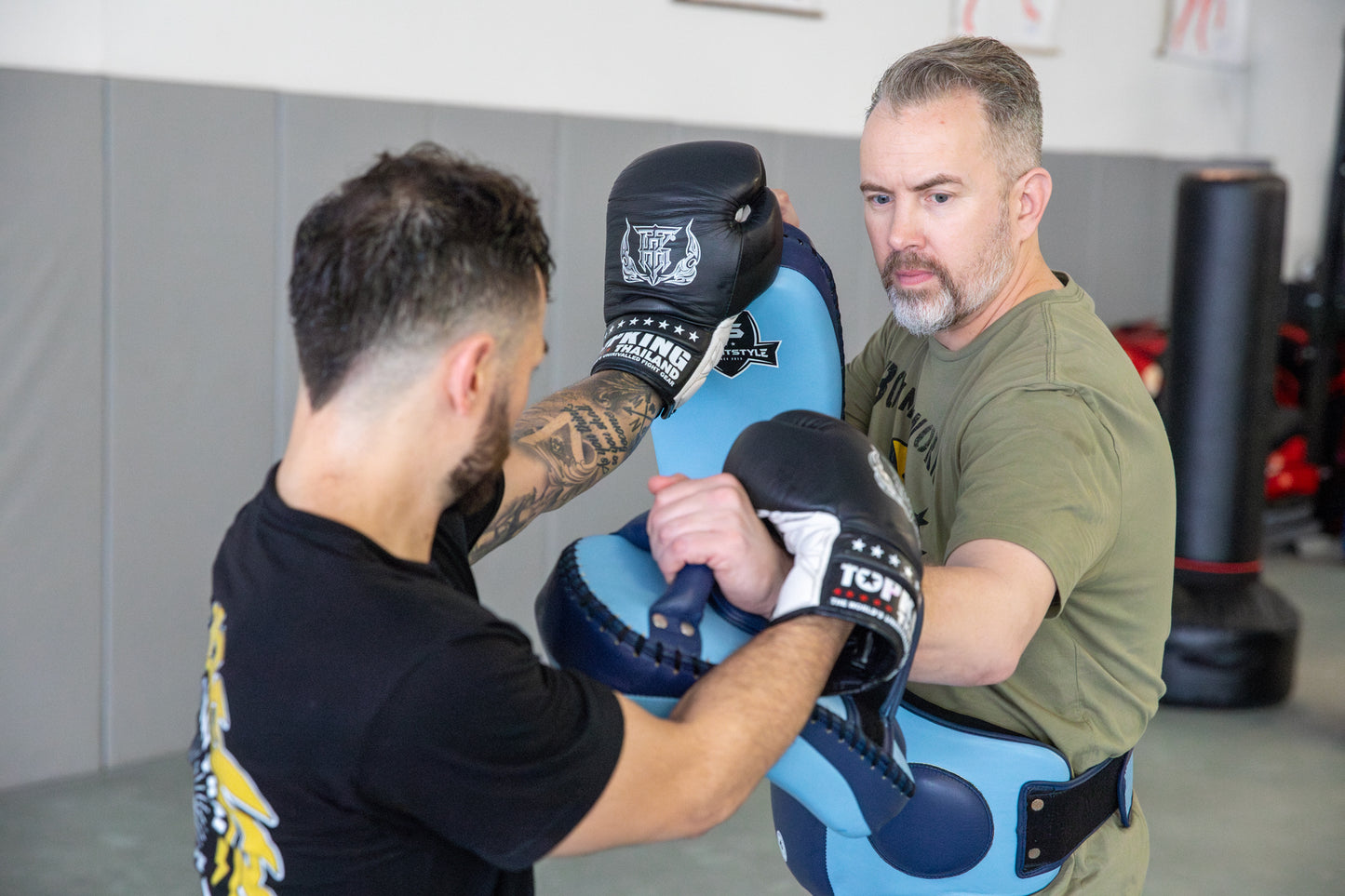
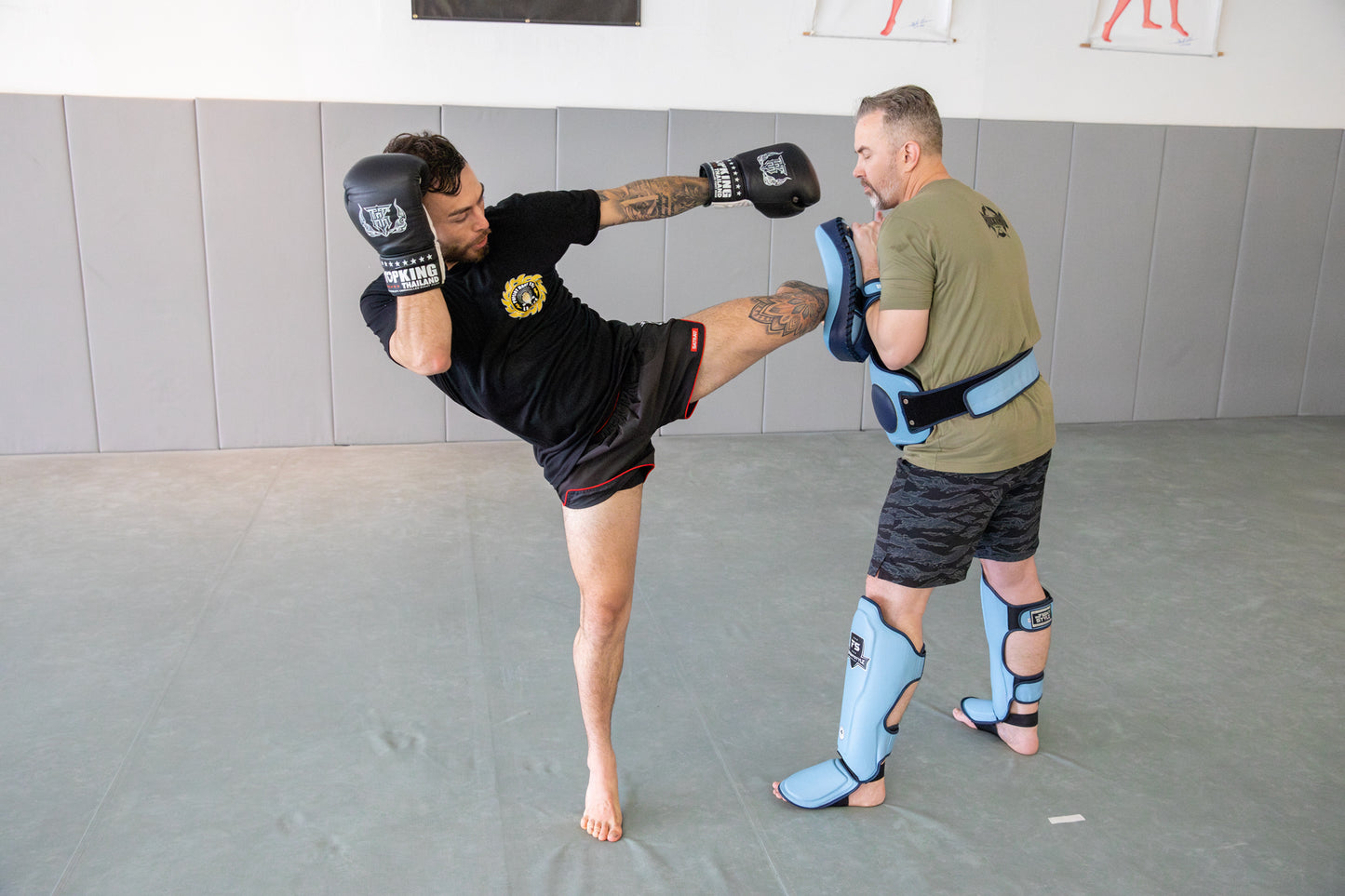
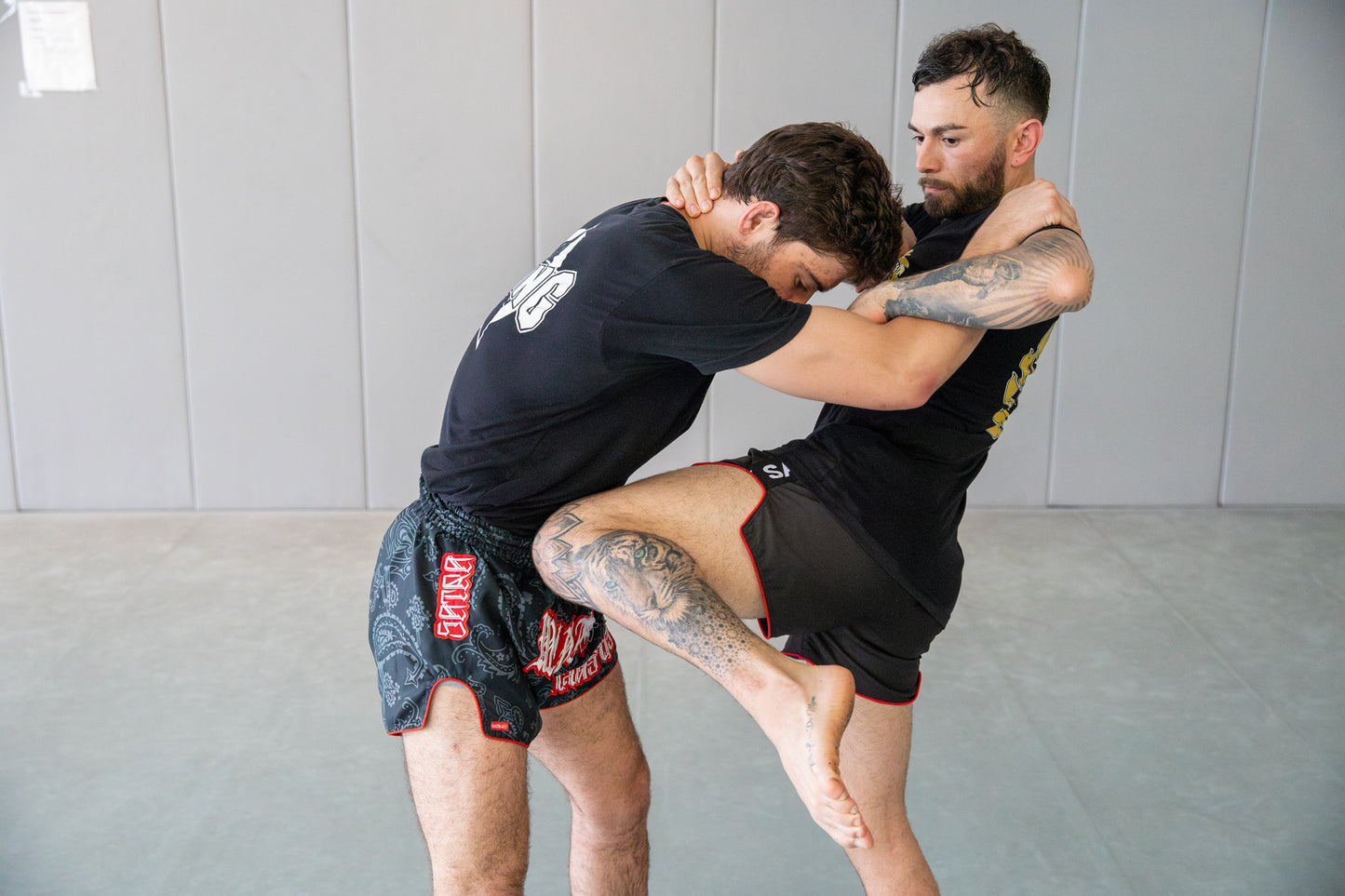


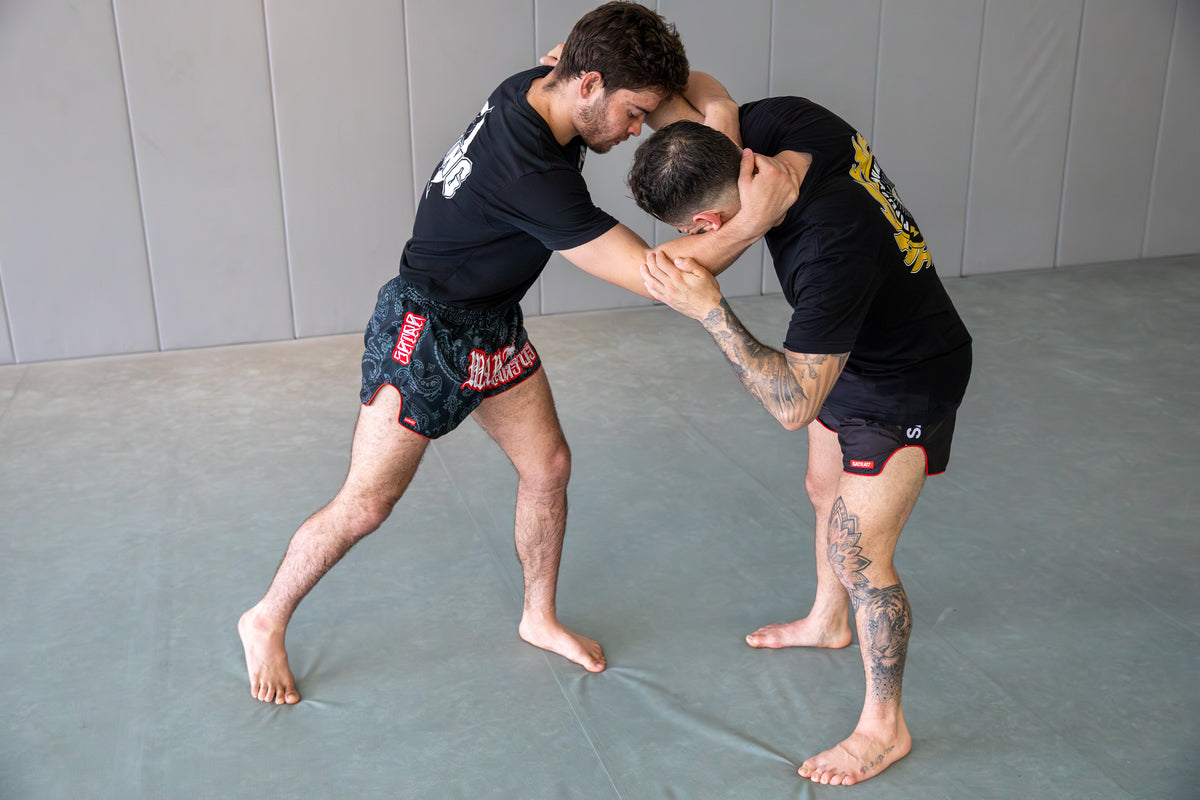

Muay Thai Training – Building Elite Muay Khao Fighters with Bryan Popejoy
Effective Muay Khao fighting is about far more than simply walking forward and throwing knees.
To consistently pressure and control experienced opponents, fighters need to understand position, balance, hand fighting, entries, rhythm, clinch control and how to connect their striking across every range.
In Muay Thai Training – Building Elite Muay Khao Fighters, world-renowned Muay Thai coach and Boxing Works owner Bryan Popejoy presents his complete Muay Khao training framework for developing intelligent, technically effective pressure and knee fighters.
Rather than simply teaching individual knee and clinch techniques, Bryan explains how he builds the different elements of Muay Khao fighting progressively — from athlete-led pad work and long-range knee attacks through to hand fighting, clinch positioning, elbows, sweeps, reversals and controlling the fight.
This is Volume 3 of Bryan's Warrior Collective instructional series and provides another fascinating insight into a coach who believes fighters should be developed around their individual strengths rather than forced into one particular style.

Muay Khao Training – Building the Complete Fighter
Muay Khao fighters are traditionally associated with pressure, knees, physical conditioning and strong clinch work.
But effective pressure isn't simply about continually moving forward.
How do you close distance without continually walking onto strikes?
How do you establish the hand position you need inside the clinch?
How do you create space for knees when an opponent is trying to shut them down?
How do you transition from boxing into knees?
And how do you make an opponent work at a pace and in positions they don't want?
Throughout this instructional, Bryan breaks Muay Khao fighting into a series of progressive systems designed to develop fighters capable of controlling both the range and the opponent.
The result isn't simply a fighter who can throw good knees.
It's a fighter who understands how to create the situations in which those knees, elbows and clinch attacks become increasingly difficult to stop.

Learn from Bryan Popejoy
Bryan Popejoy is the owner and head coach of Boxing Works in Southern California and one of the most respected American Muay Thai coaches of his generation.
Boxing Works opened in 1993 and developed into one of Southern California's leading Boxing, Muay Thai and Kickboxing facilities. Bryan has spent decades at the centre of that development, coaching everyone from recreational students through to world-class professional fighters.
Among the athletes most closely associated with his coaching are Janet Todd and Jackie Buntan, two of the most successful American female strikers to compete internationally.
Todd became a two-sport ONE World Champion across Kickboxing and Muay Thai, while Buntan progressed from beginning her Muay Thai journey at Boxing Works as a child to winning the ONE Women's Strawweight Kickboxing World Championship.
Both demonstrate something particularly important about Bryan's approach to coaching:
He doesn't attempt to build every fighter the same way.
Rather than imposing one fixed style, Bryan develops systems around the attributes, strengths and tactical requirements of the individual athlete.
Despite rarely seeking the spotlight himself, that analytical and adaptable approach has earned Bryan considerable respect amongst fighters and coaches — and helped make him one of the most popular instructional coaches on Warrior Collective.
His three-volume series provides a rare opportunity to study those methods in detail.

Muay Thai Training – Building Elite Muay Khao Fighters
This third instructional focuses specifically on developing fighters who can effectively pressure, knee, clinch and control opponents.
Bryan begins by examining how athletes can take greater responsibility within pad work before progressively connecting the different ranges required for effective Muay Khao fighting.
From there, the instructional moves through hand fighting, knee attacks, clinch positioning, sweeps, reversals, elbows and the small positional details required to control increasingly experienced opponents.
The objective throughout is not simply to collect techniques.
It is to understand how those techniques can be connected into a complete fighting system.
What You'll Learn
Athlete-Led Pad Work
Pad work doesn't always have to be dictated entirely by the pad holder.
Bryan introduces frameworks that encourage fighters to become increasingly involved in directing the session themselves.
Learn how athlete-led and freestyle pad work can develop decision-making, creativity, reactions and Fight IQ, rather than simply the ability to follow predetermined combinations.
Pad Work Across Every Range
Muay Thai doesn't take place at one distance.
Bryan explores how pad work can be structured across different ranges and how fighters can learn to transition naturally between them.
Develop the ability to move from long-range striking into boxing, knees and close-range work without treating each area as a completely separate skill.
Dominating the Clinch
Effective Muay Khao fighters need to be comfortable when the fight becomes physical.
Bryan introduces advanced clinch concepts designed to help fighters establish position, disrupt their opponent's posture and create opportunities for knees and other attacks.
The emphasis is on understanding why one position is stronger than another, rather than simply memorising clinch techniques.
Winning the Hand Fight
Before you can dominate the clinch, you often have to win the battle for position.
Bryan breaks down his approach to hand fighting from fundamental concepts through to more advanced applications.
Learn how control of the arms, head and upper body can prevent an opponent establishing their preferred position while creating the grips and openings required for your own offence.
Building Muay Khao Fundamentals
Develop the technical foundations required to become an effective knee fighter.
Bryan combines hand controls, positioning, pressure and different knee attacks into a progressive framework that can be adapted according to the fighter.
Rather than simply learning to throw more knees, understand how to put yourself in position to consistently land them.
Setting Up Knees from Range
The knee doesn't have to begin inside the clinch.
Learn how probes, feints, boxing and positioning can be used to disguise and create long-range knee attacks.
Bryan demonstrates how fighters can influence an opponent's reactions before exploiting the resulting openings.
Boxing into Knees
Punching can provide the bridge between striking range and Muay Khao range.
Learn how boxing combinations can occupy an opponent's guard, disrupt their balance and create opportunities to enter behind powerful knee attacks.
The objective is to make the transition from hands to knees feel like one continuous attacking sequence.
The Rhythm of the Knee
Timing a knee correctly can be more important than simply throwing it harder.
Bryan introduces drills designed to help fighters recognise an opponent's rhythm before disrupting or exploiting it with knee attacks.
Develop a better understanding of when the opponent is vulnerable, rather than simply attacking whenever the weapon is available.
Knees to the Head
Attacking the head with knees requires different positioning and setups to attacking the body.
Bryan explores the details required to create these higher-value opportunities while maintaining control and position.
Learn how to build the attack rather than simply trying to force the technique.
Flowing Knees & Knee Combinations
An opponent will rarely remain in exactly the position you want.
Learn how to move between different hand controls, ranges and knee attacks as the opponent attempts to defend or reposition.
Bryan develops combinations that allow fighters to flow from one knee framework into another, maintaining offensive pressure without becoming predictable.
Effective Clinch Positioning
Success inside the clinch often comes down to centimetres.
Head position, posture, arm placement, balance and hip position can determine who is capable of attacking and who is forced to defend.
Bryan breaks down the positional battle required to consistently create opportunities for knees and elbows while limiting the opponent's ability to respond.
Sweeps, Trips & Reversals
Muay Khao fighting isn't solely about striking.
Bryan demonstrates how positional control can create opportunities to disrupt an opponent's balance through sweeps, trips and reversals.
Learn how these techniques connect naturally with the wider clinch battle rather than treating them as isolated tricks.
Creating Gaps in the Clinch
Experienced opponents won't simply allow you to knee them repeatedly.
They will frame, control, close space and attempt to neutralise your attacks.
Bryan explores ways to create the small gaps required to attack, using position and control to open opportunities for knees and elbows.
Boxing into Elbows
Elbows provide another important attacking layer as the distance closes.
Learn how boxing can be used to occupy the opponent, manipulate their guard and create opportunities to transition into elbows.
This adds another threat to the process of moving from outside striking into close-range fighting.
Controlling the Fight
The final objective is not simply to become better at clinching or throwing knees.
It is to become better at controlling where and how the fight takes place.
Bryan brings the different elements together into a framework for using position, pressure and control throughout the ranges of Muay Thai.
Instead of chasing techniques, learn how to create the conditions in which your strongest weapons become increasingly difficult for the opponent to avoid.

Muay Khao Is More Than Forward Pressure
It is easy to look at an effective Muay Khao fighter and see aggression.
What is less obvious is the technical work making that aggression successful.
Foot position.
Hand control.
Balance.
Head position.
Rhythm.
Entries.
Clinch position.
The ability to create space — and then take it away again.
These details are what turn forward movement into intelligent pressure.
Bryan's system therefore isn't about telling fighters to simply become tougher, fitter and more aggressive.
It provides a framework for teaching them how to systematically impose their game on an opponent.

Who Is This Instructional For?
Muay Thai Training – Building Elite Muay Khao Fighters is ideal for intermediate and advanced:
Muay Thai fighters wanting to improve their pressure fighting, knees, clinch work and ability to control opponents.
Muay Khao fighters looking to develop a more structured and technically complete approach to their preferred fighting style.
Kickboxers and K-1 fighters interested in developing knee entries, pressure, hand fighting and close-range striking that can be adapted to their particular ruleset.
MMA athletes wanting to improve clinch positioning, knees, hand fighting and their ability to connect striking ranges.
Competitive fighters wanting to become more effective at imposing their preferred style rather than continually reacting to their opponent.
And particularly coaches looking for progressive frameworks for teaching pad work, pressure, knees, clinch control and Muay Khao fighter development.

Volume 3 of the Bryan Popejoy Coaching Series
This instructional completes Bryan Popejoy's three-part Warrior Collective series, with each volume exploring a different element of his approach to developing intelligent, adaptable fighters.
Volume 1 – Elite Level Striking Drills: Raising Fight IQ
Discover Bryan's wider approach to fighter development through lead and rear kicking systems, defence-to-offence, parrying, blocking, dynamic striking, kick exchanges, angles, feints and purposeful training drills.
This establishes many of the Fight IQ and training principles that underpin the rest of the series.
Volume 2 – Muay Thai Fight IQ: The Counter Fighting System
Progress into Bryan's dedicated counter-fighting framework.
Learn how footwork, stalking, baiting, tempo, positioning and angles can influence an opponent's behaviour and deliberately create opportunities to counter punches and kicks.
Instead of simply reacting to opponents, learn how to make their attacks increasingly predictable.
Volume 3 – Muay Thai Training: Building Elite Muay Khao Fighters
Learn how to impose your own game through pressure, knees, hand fighting, clinch positioning, elbows, sweeps, reversals and positional control.
Rather than waiting for the opponent to create opportunities, develop the ability to consistently take the fight into the ranges and positions where you are strongest.
Together, the three volumes provide an extensive insight into Bryan's philosophy of developing the fighter rather than simply teaching techniques.
Looking for Bryan Popejoy's Complete Coaching System?
Be sure to scroll to the bottom of this page to discover the Bryan Popejoy Complete Bundle.
You'll receive every Warrior Collective instructional in Bryan's acclaimed series while saving substantially compared to purchasing each volume individually.
From elite striking drills and Fight IQ development through to advanced counter fighting, pressure, clinch control and Muay Khao training, the Complete Bundle provides an in-depth insight into the coaching systems Bryan uses to develop world-class fighters at Boxing Works.
Ideal for fighters looking to become more intelligent and adaptable strikers, and coaches wanting proven training methods, drills and frameworks they can introduce directly into their own sessions.

Develop Fighters Who Can Impose Their Game
Good fighters can perform techniques.
Better fighters understand when to use them.
But the most difficult fighters to face are often those capable of making the fight happen on their terms.
They control the range.
They win the positional battles.
They make opponents work.
They create openings.
And when the fight enters their strongest area, they know how to keep it there.
Muay Thai Training – Building Elite Muay Khao Fighters provides Bryan Popejoy's framework for developing exactly that type of fighter.
Don't simply teach fighters how to move forward.
Teach them how to take control.
Frequently Asked Questions
What is a Muay Khao fighter?
A Muay Khao fighter is a Muay Thai fighter whose style places particular emphasis on knees, forward pressure, physical control and close-range fighting.
Muay Khao fighters are often associated with the clinch, but effective knee fighting isn't restricted to close range. Knees can be set up from distance, combined with punches and used as opponents attempt to close or escape.
The best Muay Khao fighters therefore combine pressure with intelligent positioning, balance, timing and the ability to control where exchanges take place.
What does Muay Khao mean in Muay Thai?
Muay Khao is commonly used to describe the knee-fighting style or knee specialist within Muay Thai.
Although powerful and repeated knee attacks are a defining characteristic, the style also relies heavily on pressure, conditioning, clinch positioning, hand fighting, balance and control.
Rather than thinking of Muay Khao simply as "throwing lots of knees", it is better understood as a complete fighting style built around creating and maintaining the positions from which knee attacks become particularly effective.
How do you train to become a Muay Khao fighter?
Developing an effective Muay Khao style requires more than practising knee strikes.
Training should progressively develop pressure, entries, hand fighting, clinch positioning, balance, knee setups, rhythm, positional control and the ability to connect different ranges of the fight.
Fighters also need the conditioning and composure required to continually apply pressure without sacrificing their technique.
Bryan Popejoy's system approaches Muay Khao development in exactly this way, building individual skills before connecting them into a wider framework for controlling opponents.
Do Muay Khao fighters only fight in the clinch?
No. Although clinch fighting is an important part of the Muay Khao style, effective knee fighters need to be capable of creating their preferred positions from multiple ranges.
Knees can be set up through boxing, feints, probes, forward pressure and long-range attacks before progressing into closer-range hand fighting and clinch control.
Bryan therefore teaches Muay Khao as a connected fighting system rather than treating clinching and knee striking as completely separate skills.
How do you set up knees in Muay Thai?
Knees become considerably more effective when the opponent is forced to react before the knee is thrown.
Common setups can involve punches, feints, probes, pressure, hand controls and changes of position.
For example, boxing can occupy or raise an opponent's guard before creating an opportunity to transition into a knee.
Bryan's system explores both long-range knee setups and close-range controls so fighters learn how to create opportunities rather than simply throwing knees and hoping they land.
How important is hand fighting in the Muay Thai clinch?
Hand fighting is extremely important because establishing superior grips and controls can determine who dictates the position inside the clinch.
Effective hand fighting can help a fighter control posture, prevent an opponent establishing their preferred grips, create openings for knees and elbows and transition into stronger clinch positions.
Bryan teaches hand fighting progressively, allowing fighters and coaches to build from fundamental positional concepts into more advanced applications.
How do you improve your positioning in the Muay Thai clinch?
Good clinch positioning depends on understanding posture, balance, head position, arm position, hip position and control of the opponent.
Small positional advantages can dramatically affect a fighter's ability to knee, elbow, sweep or defend.
Rather than concentrating solely on individual clinch techniques, fighters should learn to recognise which positions give them greater control and how to progressively improve their position as an opponent reacts.
This positional battle is one of the central themes throughout Bryan Popejoy's Muay Khao system.
How can I improve my knees in Muay Thai?
Improving your knees requires more than developing power.
Fighters should work on balance, timing, range, hip position, setups and the ability to throw different knees from different positions.
It is also important to understand how knees connect with other weapons.
Bryan explores boxing into knees, long-range setups, the rhythm of knee attacks, knees to the head and flowing between different knee frameworks so that the weapon becomes part of a complete striking system.
How do you connect boxing with knees in Muay Thai?
Boxing can be used to close distance, occupy the guard and influence an opponent's defensive reactions before transitioning into knees.
Rather than treating punches and knees as separate combinations, fighters can learn to make the transition between the two ranges increasingly seamless.
This is particularly valuable for Muay Khao fighters because effective boxing can provide a route into the positions where their knee attacks and close-range skills become most dangerous.
What is athlete-led pad work?
Athlete-led pad work gives the fighter greater responsibility for deciding which attacks, combinations or transitions to use rather than simply following every instruction from the pad holder.
When introduced appropriately, this can help develop decision-making, creativity, reactions and Fight IQ.
Bryan uses athlete-led and freestyle pad work as part of his wider fighter-development methodology, helping athletes learn to recognise opportunities rather than becoming dependent on predetermined pad combinations.
Is this Muay Khao instructional suitable for coaches?
Yes. Muay Thai Training – Building Elite Muay Khao Fighters is particularly valuable for coaches because Bryan Popejoy presents Muay Khao development as a progressive coaching system rather than simply demonstrating individual techniques.
The volume provides frameworks for pad work, pressure fighting, hand fighting, knees, clinch positioning, elbows, sweeps, reversals and controlling opponents across different ranges.
These concepts can be adapted into technical classes, partner drills, pad work, clinch sessions and individual fighter-development programmes.
Is this instructional suitable for beginners?
The instructional is primarily aimed at intermediate and advanced fighters and coaches, particularly those who already understand the basic weapons and positions of Muay Thai.
However, coaches can adapt many of Bryan's frameworks for less experienced students.
The progressive nature of areas such as hand fighting, pad work and positional development also makes the volume useful for understanding how Muay Khao skills can be built over time rather than introduced all at once.
Can Kickboxers and MMA fighters use these Muay Khao concepts?
Many of the underlying concepts can be adapted for Kickboxing, K-1 and MMA, although the techniques used will depend on the ruleset.
Pressure, knee entries, hand fighting, positional control, boxing into knees and close-range striking can all have applications outside traditional Muay Thai.
MMA athletes in particular may find the concepts surrounding hand fighting, clinch positioning and controlling an opponent useful, although they must also account for takedowns and the additional positional demands of MMA.
Who is Bryan Popejoy?
Bryan Popejoy is the owner and head coach of Boxing Works in Southern California and one of the most respected American Muay Thai coaches.
He has spent decades developing fighters and is particularly recognised for his work with elite athletes including Janet Todd and Jackie Buntan, who have competed successfully at the highest levels of ONE Championship.
Bryan's coaching places considerable emphasis on Fight IQ, technical detail, adaptability and developing systems around the strengths of the individual fighter rather than attempting to make every athlete fight in exactly the same way.
Do I need Bryan Popejoy's first two volumes before studying the Muay Khao instructional?
No. Muay Thai Training – Building Elite Muay Khao Fighters is a complete standalone instructional.
You don't need to own Volumes 1 or 2 to understand and apply the material.
However, studying all three volumes provides a more complete picture of Bryan's coaching methodology — progressing from intelligent striking development in Volume 1, through proactive counter fighting in Volume 2, before moving into pressure, knees, clinch work and positional control in Volume 3.
Below is an extract from the volume. This clip is from Video 5 - Knees to Attack & Defend
Bryan Popejoy Series
Volume 1 - Elite Level Striking Drills - Raising Fight IQ
Volume 2 - Muay Thai Fight IQ - The Counter Fighting System
Volume 3 - Muay Thai Training - Building Muay Khao Fighters