


Online Martial Arts Training Videos | Warrior Collective
Dutch Kickboxing Combination Systems – Building Elite Fighters with Said El Badaoui
Dutch Kickboxing Combination Systems – Building Elite Fighters with Said El Badaoui
Couldn't load pickup availability


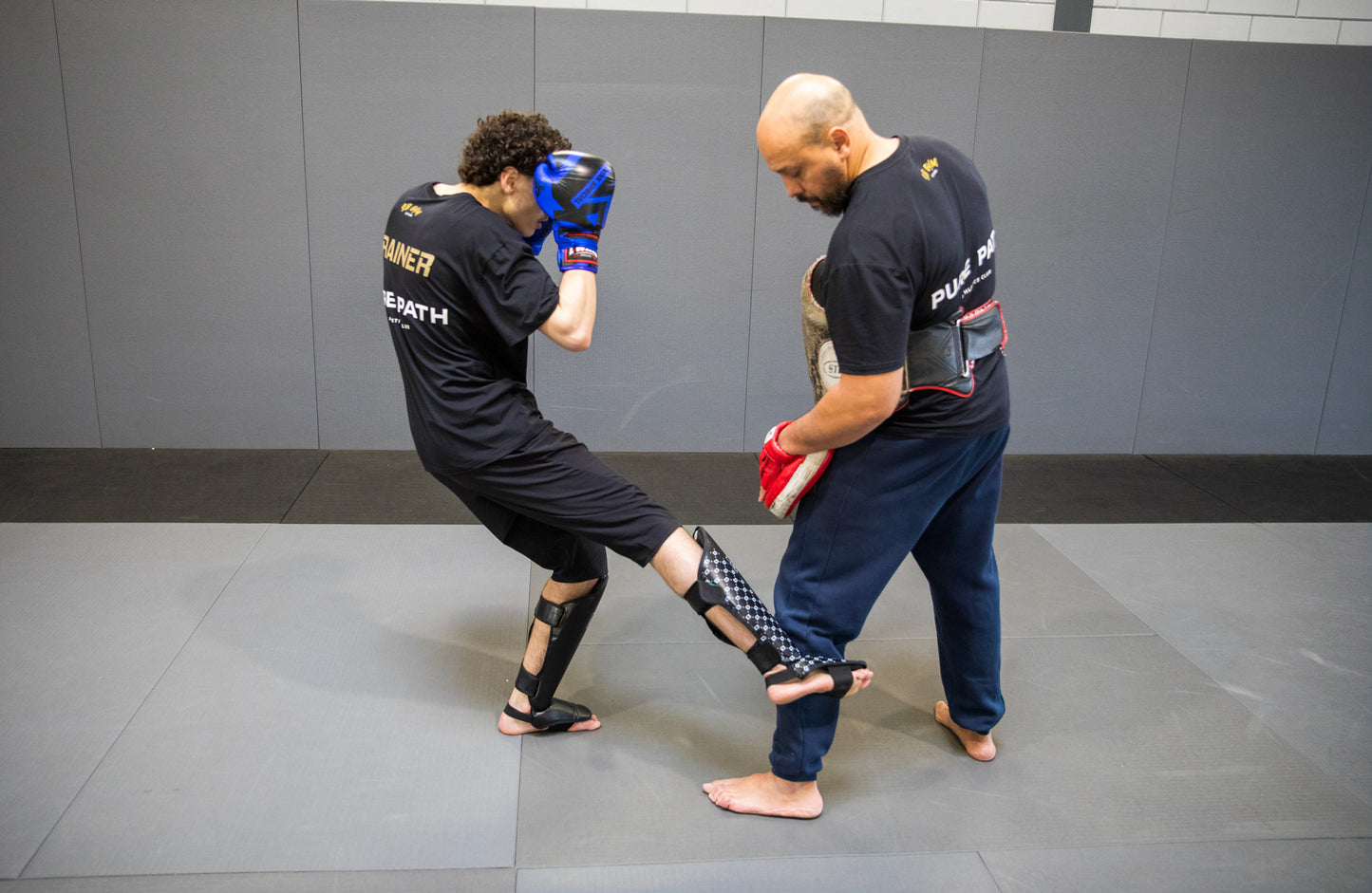

Dutch Kickboxing Combination Systems – Building Elite Fighters with Said El Badaoui
Great Kickboxing isn't built by memorising combinations.
It's developed by understanding how attacks connect, how opponents react and how to keep building the exchange when the first attack doesn't work.
In Dutch Kickboxing Combination Systems – Building Elite Fighters, world-renowned SB Gym founder and head coach Said El Badaoui returns to Warrior Collective for the second volume in his expanding series, presenting an extensive collection of progressive training drills designed to develop more complete and intelligent strikers.
Building upon the principles introduced in Dutch Kickboxing Training Drills – Fighter Development, this new instructional takes Said's coaching methodology considerably further.
Rather than teaching isolated techniques, Said demonstrates how punches, kicks, knees, footwork, counters, angles and defensive reactions can be layered together through progressive partner drills until fighters learn to flow naturally between offence and defence.
The result is a modern evolution of the Dutch Kickboxing training methods that have helped produce generations of elite fighters.

Build Better Dutch Kickboxing Combinations
Dutch Kickboxing has long been associated with high-volume combinations and the famous partner-based give-and-take drilling seen throughout gyms in the Netherlands.
Said takes that traditional methodology and develops it further.
Instead of repeating predetermined combinations purely for conditioning, every drill has a tactical purpose.
One layer creates a reaction.
That reaction creates the next attack.
The opponent counters.
The fighter adapts again.
As the drills progress, simple combinations develop into increasingly sophisticated exchanges incorporating calf kicks, body kicks, knees, angles, footwork, defensive movement and multi-phase attacks.
It's a training methodology designed to develop fighters who can think while they strike.

Learn from Said El Badaoui
Said El Badaoui is the founder and head coach of SB Gym in Utrecht, Netherlands, and one of the most respected striking coaches working in combat sports today.
His coaching career has seen him work with elite competitors across Kickboxing, Muay Thai and MMA, including fighters such as Badr Hari, Melvin Manhoef, Ilias Bulaid, Ilias Ennahachi and Tayfun Özcan. SB Gym itself works with competitors across organisations including GLORY, ONE Championship, Bellator and UFC.
His approach combines the pressure, volume and combination work traditionally associated with Dutch Kickboxing with a far greater emphasis on movement, adaptability and fight IQ.
This instructional gives fighters and coaches rare access to the methodology behind that approach.

What You'll Learn
Setting Up Calf Kicks
Learn how to integrate the calf kick into combination work rather than throwing it as an isolated attack, using punches and movement to create better opportunities to damage the lead leg.
Setting Up Body Kicks
Develop combinations that manipulate an opponent's guard and positioning before opening the body for powerful kicks.
Building Kickboxing Combinations
Understand how Said builds combinations progressively rather than simply giving fighters sequences to memorise.
Learn how punches, kicks and knees can be layered together to create attacks that remain effective when opponents begin reacting.
Switch-Hitting Combinations
Develop the ability to change stance during exchanges while maintaining balance, pressure and attacking opportunities.
Attacking with Angles
Stop attacking exclusively in straight lines.
Said demonstrates how subtle directional changes and footwork can create superior positions for punches, kicks and follow-up attacks.
Countering Straight Punches
Develop structured defensive reactions against jabs and straight punches before immediately turning defence into offence.
Off-Line Counter Striking
Learn how moving your head and body away from the centre line creates opportunities to counter while making you more difficult to hit.
Footwork & Counter Fighting
Combine defensive movement with immediate attacking responses so that your footwork becomes an offensive weapon rather than simply a means of escaping.
Kickboxing Agility & Movement
Develop the balance, coordination and directional movement required to attack effectively while constantly changing position.
Three-Phase Attacking Systems
Learn how elite fighters continue attacking beyond the initial combination.
Rather than thinking in single exchanges, Said develops sequences where the first attack creates the second — and the opponent's reaction creates the third.
This is where combination training begins developing genuine Kickboxing fight IQ.
Knees for K-1 Kickboxing
Integrate knees naturally into punching and kicking combinations while understanding the ranges and opportunities that make them effective within K-1-style competition.
Evasion & Redirection
Develop defensive reactions that don't simply stop an attack but redirect opponents into positions where immediate counters become available.
From Combinations to Complete Striking Systems
The real value of this instructional isn't the number of combinations you'll learn.
It's understanding how to build them yourself.
Said's layered approach teaches fighters to recognise the relationship between:
Attack → Reaction → Counter → Reposition → Attack Again
Instead of remembering increasingly long sequences, fighters begin understanding why each strike creates the next opportunity.
That's the difference between simply learning combinations and developing an adaptable striking system.

Traditional Dutch Kickboxing Drills – Evolved
The partner drills throughout this instructional use the familiar give-and-take structure associated with Dutch Kickboxing training.
One fighter attacks.
The other defends and responds.
The first fighter reacts again.
But Said continually layers additional decisions, attacks and movements into those exchanges.
This allows fighters to develop timing, rhythm, defensive responsibility and combination flow while working with a live partner.
And although demonstrated primarily as partner drills, many of these same frameworks can easily be transferred directly into Kickboxing pad work.
That makes the volume particularly valuable for coaches looking for structured training material they can immediately introduce into their own classes and fighter sessions.

Who Is This Instructional For?
Dutch Kickboxing Combination Systems – Building Elite Fighters is designed primarily for intermediate to advanced:
Kickboxers looking to develop more sophisticated combinations and counter-fighting systems.
K-1 fighters wanting structured drills specifically designed around punches, kicks and knees.
Muay Thai fighters looking to introduce Dutch-style combination work, movement and high-volume striking into their game.
MMA athletes wanting to improve their ability to combine punches and kicks while moving through angles and avoiding predictable striking patterns.
And importantly, coaches looking for progressive partner and pad-work drills that can form the basis of complete technical training sessions.
Continue the Said El Badaoui Kickboxing Series
Be sure to scroll to the bottom of this page to discover the Said El Badaoui Complete Bundle.
You'll receive both Warrior Collective instructionals in Said's expanding series while saving compared to purchasing each volume individually.
From Dutch Kickboxing fighter-development drills and counter-fighting concepts through to layered combinations, calf and body kick setups, angles, footwork, knees and multi-phase attacking systems, the Complete Bundle provides an in-depth insight into the modern Dutch/K-1 Kickboxing methodology Said uses to develop elite fighters at SB Gym.
Ideal for fighters and coaches looking to study a progressive, competition-proven approach to modern Kickboxing.

Build Fighters – Not Just Combinations
If you want to:
- Develop more intelligent Kickboxing combinations
- Learn modern Dutch-style partner drills
- Improve counter fighting and defensive reactions
- Integrate calf kicks, body kicks and knees into your combinations
- Develop angles, footwork and agility
- Build multi-phase attacking systems
- Introduce structured fighter-development drills into your coaching
- Study the methodology of one of the world's leading striking coaches
then Dutch Kickboxing Combination Systems – Building Elite Fighters provides a complete framework for taking your Kickboxing training beyond isolated techniques and combinations.
Learn how to build attacks. Understand reactions. Layer your combinations. And develop fighters capable of adapting when the fight doesn't follow the drill.
Frequently Asked Questions
What are Dutch Kickboxing combinations?
Dutch Kickboxing combinations typically blend boxing punches with low kicks, body kicks, knees and defensive movements to create continuous striking exchanges.
Rather than treating punches and kicks as separate skills, Dutch-style training teaches fighters to flow naturally between them. A boxing combination might create an opening for a low kick, while the opponent’s reaction to that kick can then create the next punching attack.
In Dutch Kickboxing Combination Systems – Building Elite Fighters, Said El Badaoui develops this idea further by teaching fighters how to layer attacks, counters, movement and defensive reactions into increasingly sophisticated combinations.
How do you train Dutch Kickboxing combinations?
Dutch Kickboxing combinations are commonly developed through structured partner drills, pad work, bag work and technical sparring.
Partner training is particularly important because it allows both fighters to practise attacking, defending and immediately responding to each other.
Said uses progressive drills where relatively simple combinations gradually develop into more complex exchanges. Punches, kicks, knees, counters, angles and footwork are added layer by layer, helping fighters understand how techniques connect rather than simply memorising long combinations.
What are Dutch Kickboxing drills?
Dutch Kickboxing drills are structured exercises designed to develop combination striking, defence, timing, conditioning and reactions.
A typical drill might involve one fighter attacking with a boxing combination followed by a kick before their partner defends and immediately responds with their own attack.
As fighters progress, additional layers can be introduced including counters, angles, stance switches, evasions and second or third-phase attacks.
This creates a controlled environment between static drilling and completely unrestricted sparring.
What is Dutch-style give-and-take training?
Give-and-take training is a partner-drilling method strongly associated with Dutch Kickboxing gyms.
Rather than one fighter continuously attacking while the other simply holds pads or defends, both partners alternate between attacking and defending.
For example, Fighter A attacks with a combination. Fighter B defends and returns their own combination. Fighter A must then defend before attacking again.
Said El Badaoui uses this basic structure as the foundation for much more sophisticated layered drills, helping fighters develop rhythm, defensive responsibility and the ability to transition naturally between offence and defence.
How do you set up calf kicks in Kickboxing?
Effective calf kicks are rarely about simply attacking the leg without preparation.
Punches, feints, footwork and previous kicking attacks can all be used to manipulate an opponent’s stance, attention and weight distribution before attacking the calf.
Inside this instructional, Said demonstrates how calf kicks can be integrated into Dutch Kickboxing combinations, allowing earlier strikes to create the conditions for the kick rather than treating it as an isolated weapon.
This also makes the calf kick less predictable and creates further opportunities if the opponent begins reacting to it.
How do you build Kickboxing combinations?
Good Kickboxing combinations should be built around reactions rather than memorisation.
Instead of simply learning increasingly long sequences of punches and kicks, fighters should understand why one attack creates an opportunity for another.
A punch might raise the guard and expose the body. A body kick might change an opponent’s stance. A low kick might affect their balance. Their defensive reaction can then determine the next attack.
Throughout this volume, Said teaches fighters how to progressively layer these reactions together, developing combinations that can adapt when an opponent doesn’t respond exactly as expected.
What are three-phase attacks in Kickboxing?
Three-phase attacks extend an exchange beyond the initial combination.
The first phase creates the initial attack or reaction.
The second phase capitalises on the opponent’s response.
The third phase anticipates what happens next and continues the attack from the new position.
Instead of thinking in terms of one combination followed by a reset, fighters learn to remain tactically engaged throughout a longer exchange.
Said’s three-phase attacking drills are designed to develop this ability, helping fighters improve their Kickboxing fight IQ, combination building and decision-making under pressure.
Is Dutch Kickboxing useful for MMA?
Yes. Many Dutch Kickboxing principles transfer extremely well into MMA striking.
The emphasis on combining punches and kicks, counter fighting, changing angles and remaining defensively responsible can be particularly useful for MMA athletes.
Not every traditional Kickboxing technique transfers directly because MMA introduces takedowns, smaller gloves and cage fighting. However, the underlying principles of combination building, timing, movement and creating reactionscan all be adapted effectively for MMA.
Can these drills be used for Kickboxing pad work?
Yes.
Although many of the drills in Dutch Kickboxing Combination Systems – Building Elite Fighters are demonstrated using Dutch-style partner training, the underlying combinations and progressions can also be adapted for pad work.
A coach can use the pads to recreate attacks, defensive reactions, counters and positional changes while progressively adding additional layers.
This makes the volume particularly useful for coaches looking for new Kickboxing pad-work drills as well as fighters training through partner work.
What is the difference between Dutch Kickboxing and K-1 Kickboxing?
Dutch Kickboxing generally describes a style and training methodology, while K-1 refers primarily to a competitive Kickboxing ruleset and the fighting style that has developed around it.
Dutch Kickboxing became known for combining strong Western boxing with powerful low kicks, body kicks, knees, pressure and high-volume combination work.
K-1 rules helped bring many of these methods to international prominence, but modern K-1-style Kickboxing has continued to evolve through influences from Dutch, Japanese, Thai and other striking systems.
Said El Badaoui’s coaching represents a modern evolution of the Dutch approach—retaining its combination work, pressure and partner drilling while incorporating contemporary movement, calf kicks, angles, counter fighting, agility and multi-phase attacks.
Do I need Said El Badaoui’s first volume before studying this one?
No. This instructional can be studied as a standalone volume.
However, it is also designed as the second part of Said El Badaoui’s expanding Warrior Collective coaching series.
Dutch Kickboxing Training Drills – Fighter Development introduces Said’s broader approach to developing fighters through attacking fundamentals, countering boxers and kickers, pad work, sparring concepts and structured training drills.
Dutch Kickboxing Combination Systems – Building Elite Fighters then goes deeper into combination building and layered exchanges, showing how attacks, reactions, counters, footwork and defensive movements can be progressively connected.
Studied together, the two volumes provide a much broader insight into the modern Dutch/K-1 Kickboxing methodology used by Said El Badaoui at SB Gym.
Below is an example of Said’s coaching in action